
 In stock, fast delivery in 1-3 days
 Pay in three equal instalments 3 x 31.67€
Description
 Women’s Hiking Pants ACTIVE STRETCH Olive – durable and supportive of movement
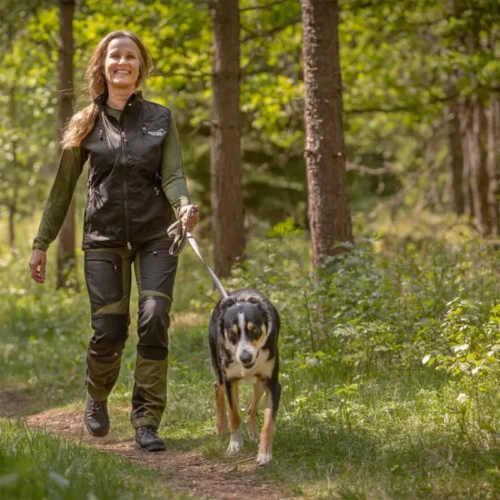 Women’s Hiking Pants ACTIVE STRETCH Olive – durable and supportive of movement
Women’s Hiking Pants ACTIVE STRETCH Olive are designed for active movement in nature, offering a balance between durability, comfort, and functionality. They are well-suited for hiking, long walks, moving through the forest, and everyday outdoor activities.
The pants are made from a material blend consisting of 65% polyester and 35% cotton. The fabric is treated with a DWR (Durable Water Repellent) finish, which helps keep light rain and moisture away. This doesn’t make the pants waterproof, but provides sufficient protection in changing weather conditions.
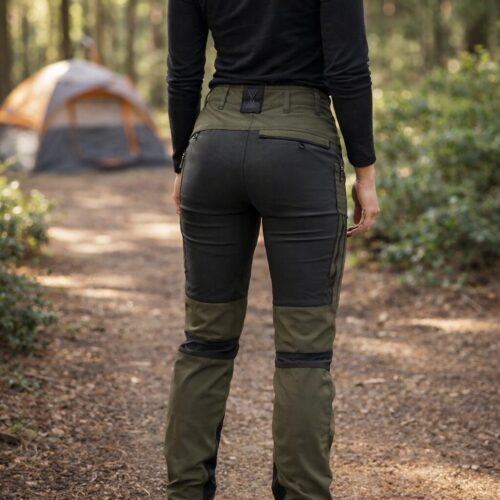
Freedom of movement is ensured by 4-way stretch panels, making squatting, climbing, and moving with longer strides more comfortable. Zippered ventilation openings in the thigh area allow you to regulate body temperature during intense activity.
The pocket layout is practical and versatile: open hand pockets, thigh pockets, and a back pocket provide enough space for storing smaller items. Seven belt loops allow you to use belts of various widths.
The inner side of the legs is reinforced to reduce wear. The leg ends are adjustable and equipped with a boot hook, which helps keep the pant leg in place and prevents dirt or snow from entering your footwear.
The weight in size 40 is 558 g, making them strong yet reasonably light hiking pants for longer trips.
What is Durable Water Repellent (DWR)?
 What is Durable Water Repellent (DWR)?
Durable Water Repellent, or Durable Water Repellent (abbreviated as DWR), is a treatment applied to the outer fabric of outdoor clothing and equipment. It is mostly done with either a spray-on agent or a wash-in product. The goal is simple: to make water roll off the fabric surface so the cloth doesn’t absorb moisture as quickly.
It’s important to understand that DWR doesn’t make a garment “truly waterproof.” Waterproofness is usually provided by a membrane laminated between the outer fabric and the inner lining. The role of DWR is to keep the outer fabric drier, because if the outer layer becomes saturated with water, the membrane’s breathability drops. This means body moisture can no longer escape as well, and you might start feeling damp and uncomfortable from the inside – especially when moving, as you get warm and sweat.
That’s why it sometimes feels like a waterproof jacket is “leaking,” even though it’s often actually your own moisture (sweat and condensation) inside, along with water accumulated in the outer fabric that inhibits breathability. DWR doesn’t make the membrane stronger, but it helps the garment work better and makes wearing it more comfortable.
How does DWR work?
DWR is a chemical treatment that makes the top surface of the fabric water-repellent. Simply put, a thin layer is created on the outer fabric that reduces surface “wetting” and changes how water behaves on the fabric. As a result, water droplets form rounder beads and find it easier to roll off the fabric instead of spreading out and getting caught between the fibers.
Over time, this protective layer can wear out. Dirt, body oils, and other contaminants that remain on the fabric surface can also weaken the effect of DWR. If the treatment is damaged, water starts to spread more, the fabric surface darkens, and moisture soaks into the outer layer – and eventually, breathability suffers too.
Women’s hiking pants and maintaining water repellency
DWR treatment doesn’t last forever. Frequent use and repeated washing reduce its effect, so it needs to be either “revived” or completely reapplied from time to time.
The easiest way to check if DWR is still working is to do a small water test. Fill a spray bottle with water and spray it onto the garment or equipment. If the water beads up on the fabric and falls off easily (or rolls away when shaken), the treatment is still in good condition. If the water absorbs quickly and the fabric becomes wet and dark, the DWR is no longer working as it should, and it’s time to reactivate or renew it.
After washing, DWR usually needs to be reactivated using heat. You can do this, for example, by putting the garment in the dryer for about 20–30 minutes. Alternatively, ironing at a low heat without steam is suitable, placing a towel between the iron and the fabric to avoid damaging the material.
If washing and heat no longer help, the treatment is likely so worn out that a new DWR layer is needed. How often to do this depends on use, but in many cases, renewal may be necessary about every 3–6 months, especially if the gear gets a lot of rain, dirt, and friction. For renewal, either a spray-on or wash-in DWR agent is mostly used, depending on the garment and the desired result.
If you need reliable and functional hiking pants that withstand active use and offer good freedom of movement, ACTIVE STRETCH Olive is a practical choice.
Find inspiration for your next adventures on Toidupakk’s Instagram and Facebook.
See hiking gear HERE.


Reviews
There are no reviews yet.