Camping Stoves
Showing all 16 results
-

Fire-Maple FMS-116 Camping Stove/Gas Burner
34.95 € Add to cart -
- 20%
QuickBoil Gas Stove / Camping Stove
Original price was: 100.00 €.79.99 €Current price is: 79.99 €. Add to cart -
- 30%
Camping gas stove / portable gas stove
Original price was: 50.00 €.34.99 €Current price is: 34.99 €. Add to cart -
- 20%
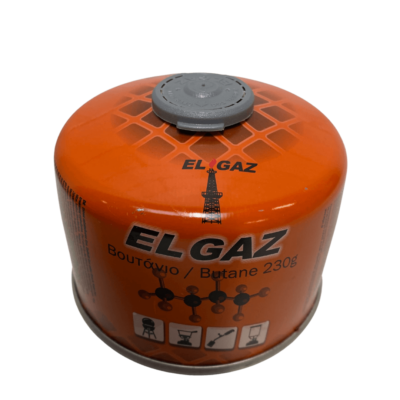
Camping Stove Gas Canister EL GAZ 227g
Original price was: 4.99 €.3.99 €Current price is: 3.99 €. Add to cart -
FireSand camping stove for fuel capsules
22.95 € Add to cart -
FireSand fuel capsules
10.85 € Add to cart -
- 35%
Fire Maple PRO Cooking System
Original price was: 100.00 €.65.00 €Current price is: 65.00 €. Select options This product has multiple variants. The options may be chosen on the product page -
- 14%
Camping gas 230g threaded canister
Original price was: 7.00 €.5.99 €Current price is: 5.99 €. Add to cart -
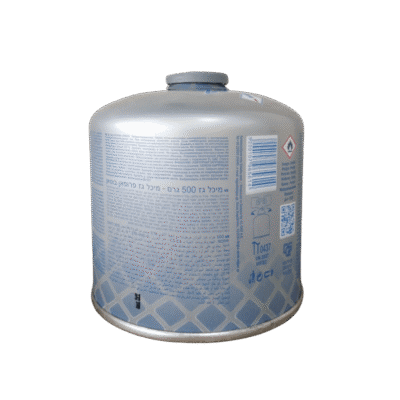
Gas canister 500g large can with thread butane and propane mix EL GAZ
8.00 € Add to cart -
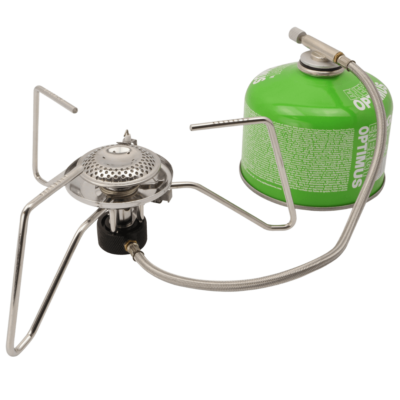
Camping stove with hose
29.99 € Add to cart -
- 28%
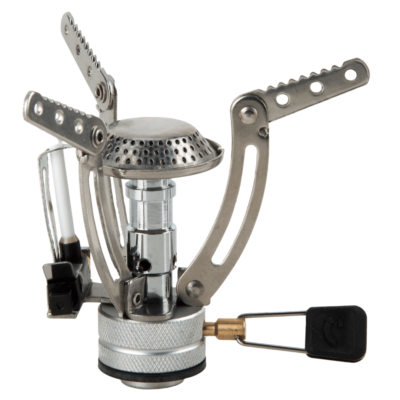
MINI Camping Stove with Electric Ignition
Original price was: 39.00 €.27.99 €Current price is: 27.99 €. Add to cart -
- 17%
Mil-Tec Spider Camping Stove
Original price was: 24.00 €.19.99 €Current price is: 19.99 €. Add to cart -
- 25%
NATO folding camping stove with fuel tablets (large)
Original price was: 20.00 €.14.99 €Current price is: 14.99 €. Add to cart -
- 28%
NATO folding camping stove with fuel tablets (medium)
Original price was: 18.00 €.12.99 €Current price is: 12.99 €. Add to cart -
FireDragon Eco Friendly Fuel Tablets
4.99 € Add to cart -
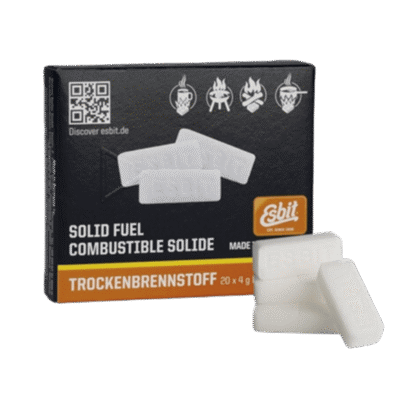
Esbit® Solid Fuel Tablets
6.49 € Read more



A camping stove is one of those pieces of equipment whose value you only truly realize when the weather turns. When a fire won’t start due to wet wood, when the wind scatters the flame, or when you need a hot drink and warm food in ten minutes during an exercise, a small stove becomes more than just a convenience.
Choosing a good camping stove doesn’t start at the shop shelf with the question of which is the most powerful or the cheapest. The right question is: what kind of hiker are you and in what situation does the stove need to help you? A weekend fishing trip by car is one thing; a one- or multi-day hike where all gear must be carried in a backpack is another.
Start with how you move
A hiker thinks in grams. When all gear is on your back, every extra item starts to make itself felt on your back and shoulders by the end of the day. In this case, it’s important that the stove is light, compact, and fits in a side pocket or inside the cookware. For example, the advantage of a very small gas burner is clear: it’s a controlled flame that allows you to boil water, make porridge, prepare freeze-dried food, or quickly get a mug of hot tea.
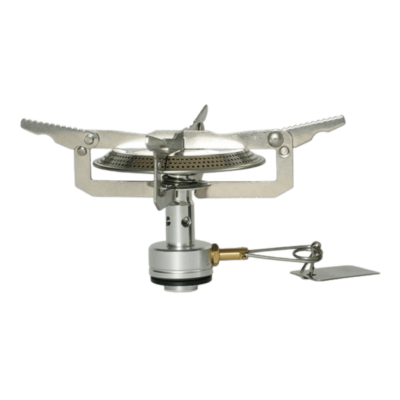
The MINI camping stove with electric ignition is a good example of such a minimalist solution. According to product info, it weighs only 135 grams, is about 8 × 6 cm when folded, works with a threaded gas canister, and has an electric igniter, so you don’t have to reach for matches or a lighter first. The power is listed at 1800 W. The Mil-Tec Spider fits the same mindset, weighing 180 grams, measuring about 10.5 × 8 cm folded, and also with 1800 W power.
The plus side of such a tiny burner is weight and space savings. The downside appears when you have to cook with a larger pot, if the surface is uneven, or if the wind is strong. A burner screwed onto the canister raises the center of gravity. A small mug or pot stays well, but a wide pan or a liter pot already requires caution. In the woods, a stove tipping over isn’t just an inconvenience; it can mean burns, wasted food, or a fire hazard during dry periods.
If you want more stability, it’s worth looking at a hose-based solution. With a hose stove, the gas canister stands separately from the stove and the burner is lower. This is a step towards a more comfortable and stable outdoor kitchen, yet remains light enough to carry in a backpack.
If speed is important, choose a cooking system
There are situations where the stove’s job isn’t to prepare a gourmet dish. You need to boil water quickly. This is usually the most important part of preparing freeze-dried camping food, coffee, tea, broth, or hygienic drinking water.
In such cases, an integrated fast-boil system is the best choice. The idea is simple: the burner, pot, heat exchanger, and windscreen work as one system. Heat isn’t lost as much to the sides, and it takes less time and less gas to boil the same amount of water.
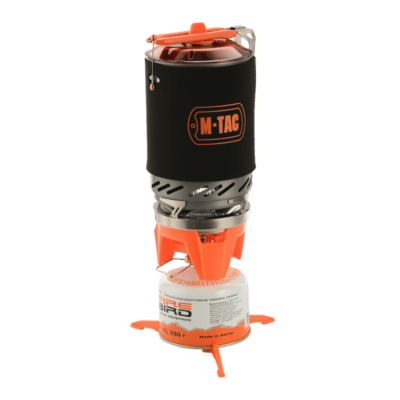
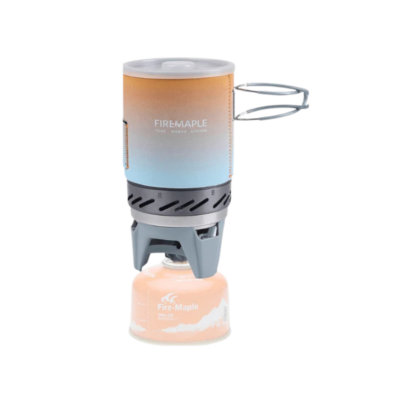
The Fire Maple PRO fast-boil system is a good example of this class. According to product info, it boils 0.5 liters of water in about two minutes, includes a 1-liter anodized aluminum pot with a heat exchanger and integrated windscreen at the base, weighs 511 grams, and a gas canister up to 230 grams fits inside the set. The QuickBoil gas stove is in the same category: 0.5 liters of water also takes about 2 minutes to boil, the system uses a radiator principle for heat distribution, includes stabilizing extra legs for the canister, weighs 620 grams, and has a power of 2200 W.
The big advantage of a fast-boil system is efficiency. In the morning, when your fingers are cold and you don’t want to fuss for long, boiling water in two minutes is a big deal. The same applies during exercises, fishing trips, or hunting, where a hot drink can be a small but important morale booster.
However, a fast-boil system isn’t always best for pancakes, frying onions, or a large family pot. A narrow, tall pot is primarily suited for boiling water and heating food. If your camping food is mainly freeze-dried packs, porridge, coffee, and soup, it’s a very good choice. If you want to fry fish in a pan, simmer a sauce, and cook for four people, choose a stove with a wider support surface.
If you carry gear by car, choose comfort and stability
Not all hikes are backpacking trips. A member of the Defense League, a fisherman, a hunter, a family camper, or someone preparing for a crisis might travel by car and set up camp where the vehicle can reach. Then there’s no point in over-emphasizing grams. Stability, comfort, power, wind protection, and the ability to use regular pots and pans become more important.
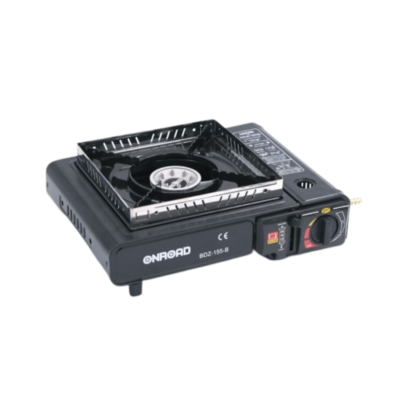
A suitcase-type portable gas stove is very practical in this role. The portable gas stove sold at Toidupakk.ee can also be connected to a large grill gas cylinder if necessary using the included adapter. It features a windscreen, ignition is via piezoelectric automatic ignition, and the power is 2.3 kW.
The strength of such a stove comes out in the wind and during real cooking. The wide base holds the pot better, the flame is controllable, and the stove is comfortable to use even when your hands are cold or when you’re cooking for several people. Toidupakk.ee product info emphasizes that this specific stove includes a windscreen, which helps keep the flame stable even in difficult weather. This doesn’t mean a strong crosswind no longer matters, but the difference between a small open burner and a protected stove is large.
However, such a suitcase stove is not a backpacker’s tool. It’s too big. Its place is in the car, boat, cottage, outdoor kitchen, crisis supplies, or base camp. During a power outage, it’s very practical at home, but only if used in a well-ventilated room and following the manufacturer’s instructions. The same product info specifically notes that the gas stove must be used in a well-ventilated area.
What is a piezo igniter and why is it useful?
A piezo igniter or piezoelectric igniter is a small mechanism that creates a spark when a button is pressed. In practice, this means you don’t have to look for matches, a lighter, or a fire starter every time. You turn on the gas, press the button, and the flame ignites.
Its advantage is especially clear in rain, wind, and cold. Wet matches, a lighter with a stiff finger, and frozen hands are not uncommon. Piezo ignition doesn’t make the stove a miracle tool, but it reduces one annoying point of failure and discomfort. An experienced hiker, however, always brings a backup ignition. A piezo can break, get wet, shift out of alignment, or simply fail. A lighter, waterproof matches, or a fire starter weigh almost nothing. In survival, good gear is that which has a backup plan.
Let’s talk about gas canisters
When choosing a camping stove, one simple but expensive mistake is often made: buying a stove and a gas canister that don’t fit together. Canisters look similar, but the connections can be completely different.
Threaded gas canisters are very common in modern camping gear. They are screwed onto the burner or hose and can be unscrewed after use and transported separately.
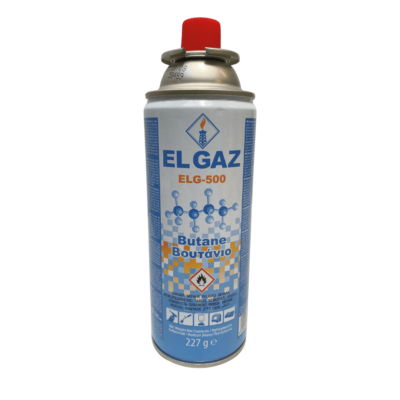
227-gram bottle-shaped gas canisters are typically used in suitcase-type gas stoves. They are filled with butane, have an automatic self-sealing valve, and burn time depends on the flame size, roughly between 1.5–3 hours. This type of canister won’t fit a standard threaded stove without the correct adapter.
The classic pierceable canister deserves a separate mention. It doesn’t have a self-sealing valve: the gas burner pierces the canister, and after that, the canister must not be removed from the stove until it’s empty. It’s a cheap and simple system but less flexible for a hiker. While you can take a threaded canister apart in the evening and pack it safely, a pierceable canister stays attached to the device. Therefore, for an active hike, I prefer a threaded system or a bottle-shaped gas with a valve designed for a specific stove.
230 g or 450–500 g canister?
When talking about threaded canisters, three sizes are common in the camping world: small 100–110 g, medium 230 g, and large 450–500 g. The 230 g canister is the golden middle ground for most hikers. It often fits inside the pot of a cooking system, isn’t too heavy, and provides a sufficient reserve for a shorter trip. When traveling alone or as a pair for a weekend, it’s usually a sensible choice, especially if food mainly means boiling water.
A 450–500 g canister is better suited for a longer camp, a larger group, traveling by car, or situations where the stove is used a lot. It’s heavier and takes up more space, but the price per gram of gas is usually better and the fear of running out is smaller. If you’re at a base camp or cooking for a family, take the larger one. If you’re on foot and counting grams, take the smaller one and calculate based on your menu.
Gas mix and winter: why does butane fail in the cold?
Not all gases behave the same in the cold. Simply put, the liquid gas in the canister must evaporate so the burner can burn it. The colder the weather, the worse some gases evaporate and the weaker the flame becomes.
Butane is very usable in warm weather but worse in the cold. Propane works better in the cold because it provides better pressure. In Estonian conditions, this means summer gas might still work in November, but don’t rely on it blindly in freezing temperatures. For winter use, prefer camping gas containing propane and isobutane, keep the canister warm before use, place it insulated from the ground, and protect the flame from the wind. Do not heat the canister over an open flame or the stove. It’s dangerous.
In some cases, hose-based stoves allow the canister to be used upside down so the fuel reaches the burner in liquid form, but this should only be done if the stove is designed for it and the manufacturer’s manual allows it. Incorrect use can cause the flame to increase uncontrollably.
NATO folding stove: a small backup plan, not an outdoor kitchen
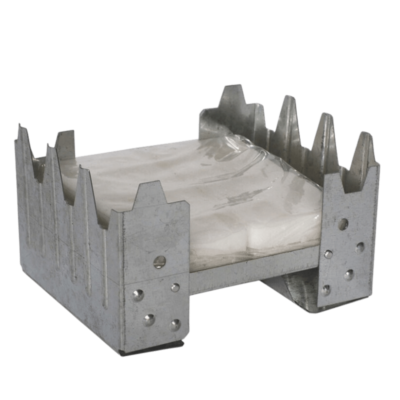
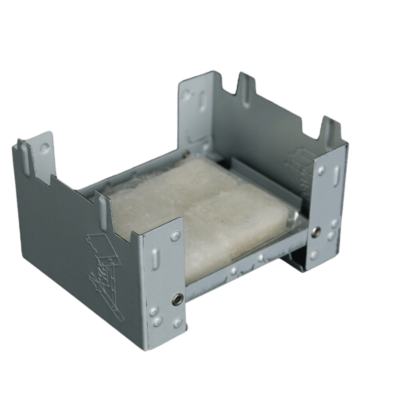
The NATO folding stove with fuel tablets is different in nature. It doesn’t compete with a gas stove in speed or comfort, but it has its place. It’s simple, compact, cheap, and works without pressurized gas. If there’s no canister, if the gas device breaks, or if you need a very simple backup for an evacuation bag, such a stove makes sense.
According to product info for the large version of the NATO folding camping stove at Toidupakk.ee, it works with fuel tablets, includes 16 tablets, measures 3 × 9 × 11.5 cm folded, 6 × 9 × 11.5 cm in working position, and weighs 325 g. This means the stove fits in a pocket, car, fishing box, or crisis bag.
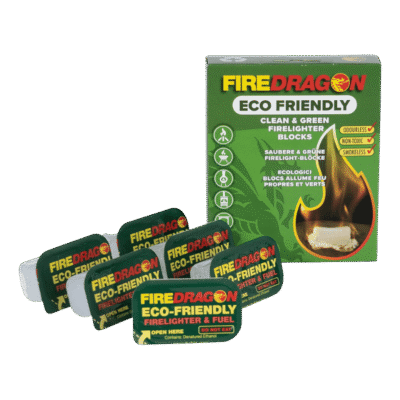
Its drawbacks are also clear. A fuel tablet burns with less power than a gas burner, often leaves soot on dishes, is sensitive to wind, and is slow for larger cooking tasks. However, it can get water hot, heat up a tin, and get a simple meal ready. In a survival kit, it’s more of a backup option than a primary kitchen.
Marten Masing / Toidupakk.ee MatkaPRO
Choosing a camping stove is an important part of assembling your hiking gear. With a camping stove, you can prepare warm food and enjoy a nice hot drink even in the most remote and windy places. But how do you find the most suitable camping stove for yourself? Here are some important points you should consider.
1. Weight: If you mainly hike on foot with a backpack, the weight of the camping stove is an important factor. Compare the weights of different stoves, especially if you want to choose a gas canister option. This helps ensure the set doesn’t become too heavy during a long hike.
2. Power: One important indicator of a camping stove’s efficiency is how fast it can boil 1 liter of water. The stove’s power can be especially important if you’re in situations where time for cooking is limited.
3. Food and people: Think about what kind of food you want to prepare on the camping stove and for how many people. Some stoves are great for quick boiling, while others allow for simmering and are suitable for a larger group.
4. Fuel type: Consider different fuel types, such as gas, liquid fuel, or alternative fuels. Using fuel tablets is also popular. Choose according to your needs and the hiking environment. Liquid fuel stoves are often stable and reliable, while gas stoves are fast and easy to use.
5. Transport and assembly: Think about how easy it is to transport and assemble the camping stove. Integrated stoves are usually compact and convenient, while stoves with a separate canister can offer more control and versatility.
6. Integrated canister or not: Consider whether you prefer a gas stove where the canister, burner, and cookware are one unit, or as separate components. Integrated stoves are compact and fast, while separate components allow for more control and freedom of choice.
7. Cookware recommendations: Choose dishes that work well with the camping stove. In Toidupakk’s hiking gear selection, you’ll find, for example, special camping pans or cookware sets. Don’t forget to add a lid to the pot, which speeds up cooking and saves fuel.
8. Frequently Asked Questions (FAQ):
Which camping stove to choose?
Is butane or propane better for a stove?
How long does 100 grams of gas last?
Where to pack the gas canister during a hike?
A camping stove is an essential companion for every hiker, allowing you to enjoy hot food and drink even in the most extreme conditions. Choose carefully, taking into account your needs and the hiking environment, and find the most suitable camping stove from our wide range of well-known manufacturers like El-Gaz, Primus, Campingaz, Coleman, and many others. At Toidupakk’s hiking gear store, you’ll find a great selection of high-quality hiking equipment at affordable prices. Check out our products and enjoy a safe and convenient shopping experience!


